
co-supervisore: prof. Andrea Ceccherelli, prof. Joanna Goszczyńska; co-supervisor: prof. Tereza Chláňová
Research: Self-translations as sites of transnational literary creation in Polish and Ukrainian Modernism
Serena Buti nel 2019 ha conseguito la laurea triennale in “Lingue, Culture, Letterature, Traduzione” (L-11) presso l’Università di Roma “La Sapienza”, discutendo una tesi dal titolo “Il Duello di Anton Čechov” (prof.ssa B. Ronchetti). Durante il percorso di laurea triennale ha soggiornato a Mosca (Istituto Puškin; MSUPE) e a Varsavia (Università Cardinale Stefan Wyszyński) per perfezionare le lingue. Nel 2022 ha conseguito presso “La Sapienza” la laurea magistrale in “Scienze Linguistiche, Letterarie e della Traduzione” (LM-37), discutendo una tesi dal titolo “L’autocreazione post-romantica in Biesy di Piotr Odmieniec Włast” (prof.ssa M. Woźniak, prof. L. Marinelli). In questo lavoro ha offerto la prima traduzione italiana della prosa poetica Biesy e ha proposto una lettura differente di quest’opera. Alcuni risultati della tesi sono stati presentati al Decimo convegno internazionale degli studenti magistrali presso l’Università di Katowice. Dopo la laurea magistrale ha soggiornato a Cracovia (Università Jagellonica) con una borsa di studio del governo polacco. Attualmente è dottoranda in “Studi Germanici e Slavi” (curriculum di “Studi Slavi”) presso l’Università di Roma “La Sapienza”. I suoi interessi di ricerca riguardano gli studi della traduzione letteraria, in particolare quella poetica, le relazioni tra letteratura polacca, ucraina e russa, soprattutto nelle zone di confine, gli studi di genere.
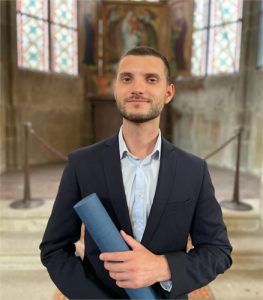
Uladzimir Morozuk
co-supervisore: prof. Ekaterina Rycheva, prof. Anna Maria Perissutti
Research: Representation of national identity in Czech political discourse
Uladzimir Morozuk was born in Minsk, Belarus and moved to the Czech Republic in 2013. He completed both his Bachelor’s and Master’s degrees in Eastern European Studies at Charles University in Prague, where he explored the connections between Russian, Belarusian, and Ukrainian languages, especially as regards agentive nouns and gender marking in job titles. In 2022, Uladzimir Morozuk has been enrolled in the joint double degree Ph.D. program of Germanic and Slavic Studies at Sapienza University (Rome, Italy) and Charles University (Prague, Czechia), proposing a research project about the representation of national identity in Czech political discourse. His interests include cognitive linguistics, political linguistics, and the mechanisms of language manipulation

Ilia Kozlov
Research: STYLISTIC PATTERNS OF THE RUSSIAN SPRING REPRESENTATION IN THE NEWS MEDIA DISCOURSE (BASED ON NEWS STORIES BY DEUTSCHE WELLE, BBC NEWS, AND RUSSIA TODAY)
Ilia Kozlov earned his bachelor’s and master’s degrees in journalism from Lomonosov Moscow State University in 2015 and 2017, respectively. During his university years at the Department of TV and radio broadcasting, Kozlov’s research areas of study were concerned with various journalistic practices and techniques in a reporter’s work, including news narratives, a transformation of stand-up elements in news reporting, an interviewer’s roles and approaches in conducting interviews, and others. From 2012 to 2018, he worked as a news reporter for the national sports channel Match TV, covering some of the most prominent sporting events such as the Olympics in 2014 and 2016, the Youth Olympics in 2014, a wide choice of world championships, the Dakar rally, the UEFA Champions League and Europa League. Since 2021, Ilia Kozlov enrolled in the joint double degree Ph.D. program of German and Slavic Studies at Sapienza University (Rome, Italy) and Charles University (Prague, Czechia) with his research project dedicated to the interplay between media studies and stylistics.
Gaia D’elia
Research: La Galizia di Joseph Roth. Per una geocritica dello spazio
La ricerca si propone di riflettere sulla percezione dello spazio e i ‘paesaggi mentali’ in Joseph Roth a partire dai suoi reportage di viaggio da territori di confine, in particolare quelli scritti per la “Frankfurter Zeitung” dalla Galizia e dal sud della Francia. Saranno indagati il punto di vista soggettivo dell’autore in relazione alla reale topografia e alla rappresentazione letteraria degli spazi. L’analisi condotta della regione storica Galizia e delle sue rappresentazioni spaziali verrà messa in relazione a testi successivi prodotti in un arco di tempo che si situa subito prima e dopo la Wende. Oggetto di indagine della ricerca è comprendere in quale misura si renda possibile leggere attraverso le descrizioni di spazi una analisi del tempo, nel tentativo di tracciare una genealogia di visioni e trovare un sistema di relazione tra la mappa, la sua rappresentazione, gli itinerari, le narrazioni e la mente.
Produzione scientifica
11573/1666087 – 2023 – Christa Wolf e Rossana Rossanda a confronto: Se la felicità?
D’elia, Gaia – 02a Capitolo o Articolo
libro: Scrivere io, scrivere (l‘)altro: immagini della memoria. Studi su Christa Wolf – ()
11573/1628557 – 2022 – Reise durch Galizien. Per una geopoetica dello spazio
D’elia, Gaia – 02a Capitolo o Articolo
libro: Passages. Scritti in ricordo di Mauro Ponzi – (9788857583778)
11573/1578325 – 2021 – Per una risemantizzazione del “mito Galizia”: Martin Pollack e Verena Dhorn
D’elia, Gaia – 02a Capitolo o Articolo
libro: East Frontiers. Nuove identità culturali nell’Europa centrale e orientale dopo la caduta del muro di Berlino – (9788857576343)
11573/1585518 – 2021 – Joseph Roth’s Itineraries Beyond Language: “der Süden konserviert die Steine, die Fragmente, die Weltanschauungen”
D’elia, Gaia – 01a Articolo in rivista
rivista: ACADEMIC JOURNAL OF MODERN PHILOLOGY (Wrocław: Oddział Polskiej Akademii Nauk we Wrocławiu) pp. 63-72 – issn: 2299-7164 – wos: (0) – scopus: (0)
11573/1345490 – 2019 – Memoria dei paesaggi. Paesaggi della memoria, Antonella Gargano, Daniela Padularosa (a cura di)
D’elia, Gaia – 01d Recensione
rivista: LINKS (Istituti Editoriali e Poligrafici Internazionali, pisa roma) pp. 131-133 – issn: 1594-5359 – wos: (0) – scopus: (0)
11573/1287822 – 2018 – Literature and Cartography. Theories, Histories, Genres, Anders Engber-Pedersen (a cura di)
D’elia, Gaia – 01d Recensione
rivista: PÓLEMOS (Roma : Stamen, [2006]-) pp. 191-196 – issn: – wos: (0) – scopus: (0)
Giuliana D’oro
Research: “PEREVODČIK-TERCÜMAN” DI ISMAIL GASPRINSKIJ ESPRESSIONE DI DIALOGO INTERCULTURALE
The issue of the complexity and multi-ethnicity of the Russian empire, has now fully entered the field of historiography, however, from a cultural and literary point of view, the variegated and heterogeneous Russian demographic panorama finds it difficult to enter and consolidate itself; the studies on the subject to date do not give an exhaustive picture of the Russian socio-political-cultural and literary mosaic provided by the realities, so to speak, on the margins of the Russian Empire (Kappeler, 1992). Russia’s history as a whole cannot be said to be exhaustively studied without integrating the variegated constellation of peoples with a different cultural, literary, economic and political heritage from which it was and it is nowadays constituted. Being the Tatars the most numerous on the Russian territory, after the Russians, I thought it appropriate to dwell on their history and on literary developments were set up primarily as a result of long-lived relationship with Slavic, Turkish and European populations. The image of the Tatars, in fact, carries within itself that of the Russians, of the Sunni Islamic religion, of the East and of the Kahn dynasty, at the same time, however, the transition between the many semblants is fluid, the alien attributions overlap and are conditioned each other. My PhD research work intends to be part of a recent research line, that investigates the role of intellectuals from cultural minorities in the Russian Empire, against the background of the complex issue of Orientalism. The analysis of the work of Ismail Gasprinskii (İsmail Gaspıralı) 1851-1914, the most influential Crimean Tatar intellectual working in the last decades of the Tsarist Empire, who was involved in the Tatar cultural revival between the 19th and the 20th century, gave me the opportunity to frame him not so much in a colonialist/imperialist dimension as in a dialogical perspective, under the banner of intercultural interaction and cooperation with the Russian state. Starting from a work of ‚reconstruction‘ of the Tatar-Muslim context, the introductory section of my research work examined the importance of the Tatar people as part of the heterogeneous Russian Empire. The Crimean Peninsula is functional to the discourse of the Russian multicultural universe not only because of its geographical location, peripheral to Russia and reaching out to the West, but also because of the ethno-cultural melting pot of the populations it hosts, mainly created by the numerous waves of migration that took place in the late 18th and throughout the 19th century. My work has set itself the task of reflecting, starting from the particular case of the Tatars, on the importance of dialogue with the other, the most important way to re-discuss and re-define values and beliefs, behaviour and lifestyles. This discourse formed the basis for understanding Ismail Gasprinskii’s socio-political activity, exemplified by the bilingual Russian-Tatar newspaper ‚Perevodčik-Tercüman‘ (The Interpreter), which right from the title refers to the need for dialogue, indispensable for personal and community progress. From this perspective, the concept of vnenachodimost‘ (extra-locality) proposed by Michail Bachtin will be fundamental in framing the discourse on Tatar-Russian mutual knowledge, especially with regard to the dual gaze from and towards another culture through literary texts (M.Bachtin, 1979). This historical and cultural background made it possible to introduce and understand the complex personality of Ismail Gasprinskii. In his works, Ismail Gasprinskii constantly emphasizes the need for unity and solidarity among the Muslims of Russia, with a view to modernization that is impossible except through dialogue and cooperation with Russia. He recognizes ignorance as the main cause of the backwardness of Russia’s Islamic communities, which have remained isolated and unaware of what has been discovered and happened in Europe. The newspaper „Perevodčik-Tercüman“ (1883-1914) is the tool chosen by the author to promote mutual understanding between Russian and Tatar cultures, written in both Russian and Türkî, a language that Gasprinskii proposes as common to all Turkophones. Gasprinskii’s work opens up interesting reflections on translation as a transit zone, a fertile ground for dialogue and creativity, on the relationship between the self and the other, between the self and the other. Thanks to the numerous studies on translation, (among others: S.Bassnett, 1993; H. Meschonnic, 1999; A.Lefevere, 1992) through the analysis of Gasprinskii’s literary and journalistic production, I focused on his main objective, that is to overcome differences and boundaries, to pass from a circumscribed cultural and political condition to another one of sharing with the Russians. In the light of the above, the final aim of my research was to study in depth the literary works written by Gasprinskii and published (in instalments) in the pages of the newspaper „Perevodčik-Tercüman“ from 1883 to 1905, on which no complete and contextualized studies have been conducted so far from a historical and cultural point of view, placing them in dialogue with the copious journalistic production; in particular, the genres and themes found in the selected corpus of works were identified, proceeding by thematic nuclei. The Appendix also contains a list of the texts published in the Russian section of the „Perevodčik-Tercüman“ (never fully indexed). I thought it would be useful to propose this tool, intended for Russian-speaking readers, but which could represent the basis for future in-depth studies and research that would allow to establish a dialogue between Russian and Tatar texts, in order to proceed, by means of a chart also included in the Appendix, to a quantitative and qualitative analysis of Ismail Gasprinskii’s publicity and literary production. Therefore, my study has proposed not only a general look at the subject, not limited to a review of works or articles on the proposed theme, but is enriched by considerations about the insidious concepts of identity and otherness, multiculturalism, intercultural translation, imagology, redefinition of spaces and borders (Salmon, 2013). In the course of these researches I investigated the Russian-Muslim socio-cultural system, its being and its historical representation. In particular, the Russian-Tatar border, with the attempts at Russification, represented a fruitful basis for the observation of trans-cultural artistic phenomena, a real frontier area open to experimentation with new identity mappings (Zekiyan, 1997). Furthermore, this initial phase of the research highlighted, in an attempt to research with a comparative and multivectoral approach, the need to investigate even further and in more depth the relations between Russians and Muslims useful for the formulation of new interpretative categories for the study of the journalistic and literary production of the Islamic communities of the Russian Empire (Kemper, 2021).
Produzione scientifica
11573/1612994 – 2022 – The Role of the Russian and Inorodcy Languages in the Muslim Question of the 19th and 20th Centuries
D’oro, Giuliana – 01a Articolo in rivista
rivista: ACADEMIC JOURNAL OF MODERN PHILOLOGY (Wrocław: Oddział Polskiej Akademii Nauk we Wrocławiu) pp. 101-116 – issn: 2299-7164 – wos: WOS:000756529700007 (0) – scopus: (0)
11573/1565271 – 2021 – Oltre la frontiera linguistica: la riscrittura della tradizione folklorica tatara in Witz und Weisheit der Tataren di Medina Mamleev
D’oro, Giuliana – 04b Atto di convegno in volume
congresso: Le frontiere dell’Est: nuove identità culturali nell’Europa Centrale e Orientale dopo la caduta del muro di Berlino (Roma)
libro: EAST FRONTIERS Nuove identità culturali nell’Europa Centrale e Orientale dopo la caduta del Muro di Berlino – (9788857576343)
11573/1612974 – 2021 – Francuzskie pis’ma, Tainstvennaja strana e Strana Amazonok sulle pagine del Perevodčik-Tercüman di IsmailGasprinskij
D’oro, Giuliana – 04b Atto di convegno in volume
congresso: Letteratura e altri mondi. Generi, Politica, Società (Bologna)
libro: Letteratura e altri mondi. Generi, politica, società – (9788854970663)
11573/1285435 – 2019 – On the 19th Century Crimean Tatar Migration. Ismail Gasprinskij’s point of view in the pages of the journal Perevodčik-Teržiman.
D’oro, Giuliana – 01a Articolo in rivista
rivista: The Annual Kurultai of Endangered Cultural Heritage (Anticus Press) pp. 35-62 – issn: 2668-3474 – wos: (0) – scopus: (0)
11573/1257701 – 2017 – Faustovskij „kod“ v romane M.A.Bulgakova „Master i Margarita“
D’oro, Giuliana – 04b Atto di convegno in volume
congresso: Filologičeskie čtenija Jargu im.P.G.Demidova, Jaroslavl‘, 22-23 maja 2017 g. (Jaroslavl‘)
libro: Filologičeskie čtenija Jargu im.P.G.Demidova – (978-5-8397-1114-3)
Giulia Olga Fasoli
Research: Costanti e varianti nella poetica tarda di Tadeusz Różewicz
La ricerca si propone di analizzare e interpretare l’ultima fase poetica di Tadeusz Różewicz a partire da uno studio filologico del materiale preparatorio della raccolta Płaskorzeźba [Bassorilievo, 1991]. Il lavoro si presenta suddiviso in tre sezioni: nella prima parte, di impianto filologico, utilizzando sia l’impostazione della critique génétique francese che la più tradizionale variantistica di Gianfranco Contini, verranno individuate e interpretate varianti manoscritte essenziali per la comprensione della poetica di Różewicz e delle sue trasformazioni; nella seconda parte, di carattere critico-letterario, si esporranno alcuni nuclei tematici della fase poetica tarda, la cui interpretazione prenderà le mosse dallo studio filologico portato avanti nella prima parte. Ampio spazio sarà dedicato in particolar modo alla poetica della reticenza e al suo dispiegarsi all’interno dell’opera di Różewicz sia da un punto di vista filologico che critico-interpretativo. Il lavoro di ricerca sarà corredato da un ampio apparato antologico di traduzioni, che pur coprendo l’intero arco dell’attività poetica dell’autore, si concentrerà sulle opere pubblicate dagli anni Novanta in poi.
Produzione scientifica
11573/1656622 – 2022 – Wcielenie słowa: On the Drafts of the Poem To Piotr by Tadeusz Różewicz
Fasoli, Giulia Olga – 01a Articolo in rivista
rivista: ACTA UNIVERSITATIS LODZIENSIS. FOLIA LITTERARIA POLONICA (Łódź: Wydawnictwo Uniwersytetu Łódzkiego) pp. 575-593 – issn: 2353-1908 – wos: (0) – scopus: (0)
11573/1662583 – 2022 – La religione nel teatro polacco contemporaneo fra tradizione e rivolta
Fasoli, Giulia Olga – 01a Articolo in rivista
rivista: SIGMA (apoli: FedOA) pp. 135-152 – issn: 2611-3309 – wos: (0) – scopus: (0)
11573/1554785 – 2021 – Identità frammentata. Tadeusz Różewicz e la reinterpretazione di Cartoteca nella Polonia post-sovietica
Fasoli, Giulia Olga – 04b Atto di convegno in volume
congresso: Le frontiere dell’Est: nuove identità culturali nell’Europa Centrale e Orientale dopo la caduta del muro di Berlino (Roma)
libro: East frontiers. Nuove identità culturali nell’Europa centrale e orientale dopo la caduta del muro di Berlino – (9788857576343)
11573/1599867 – 2021 – Tadeusz Różewicz tra l’immondezzaio e il silenzio
Fasoli, Giulia Olga – 01a Articolo in rivista
rivista: ESAMIZDAT (Roma: Alessandro Catalano e Simone Guagnelli.) pp. 265-277 – issn: 1723-4042 – wos: (0) – scopus: (0)
11573/1435814 – 2020 – Polonistica e teatro
Fasoli, Giulia Olga – 01a Articolo in rivista
rivista: EUROPA ORIENTALIS (Sapienza Università editrice -2024 Roma: SEED s.z.l.. Università di Salerno, Dipartimento di Studi Umanistici) pp. – – issn: 0392-4580 – wos: (0) – scopus: (0)
11573/1435810 – 2020 – Treny – treni – lamenti
Kochanowski, Jan; Fasoli, Giulia Olga – 06a Curatela
11573/1281848 – 2016 – Macabra Dolorosa. Varietà Dada in 14 canzoni.
Katarzyna, Chlebny; Fasoli, Giulia Olga – 06a Curatela
Matteo Iacovella
Research: Ilse Aichinger: la po-etica diffidenza della lingua Interrogare, ricercare, ridurre
Matteo Iacovella’s dissertation proposes a critical analysis of the work of Austrian writer Ilse Aichinger (1921-2016), with a special focus on the first thirty years of her oeuvre (1945-1976). The thesis divided into three sections. The first section presents the theoretical and critical framework of the project, with the aim of considering Aichinger’s writing as deeply linked to a political, historical, and existential dimension. In Ilse Aichinger’s writing, this relationship between ethical and aesthetical discourse in the literary text – as expressed in the compound word “poethics” (Weisberg 1992, Eskin 2000) – is associated with an attitude of skepticism and fundamental mistrust (Misstrauen) towards language and reality. The second section of the thesis presents the context in which Aichinger’s work originates. Beginning with her very first programmatic texts, published in the periodical «Plan» in 1946, it is also possible to reflect on the conditions of the difficult and precarious “rebirth” of the editorial and cultural scene in post-war Vienna. The third section focuses on Aichinger’s literary texts and her relationship with language. Where possible, the published work has been integrated with notes, documents, and archival traces in the author’s Nachlass in Marbach am Neckar, as well as with recently published materials. The proposed analyses follow three movements of writing: questioning, researching, reducing (interrogare, ricercare, ridurre). These modes, which permeate Aichinger’s texts beyond any possible periodization, have been associated with three literary forms: the novel Die größere Hoffnung, in which the children’s questions to the adults reveal the ethical dilemmas underneath Aichinger’s writing; the radio play, through which Aichinger experiments with the possibilities and the limits of language, sound, and silence; the Prosagedicht, a hybrid form which can be seen as the concrete realization of a gradual poetics of subtraction, as well as the point of arrival of Aichinger’s skepticism – as in her book Schlechte Wörter (1976).
Produzione scientifica
11573/1699861 – 2024 – Che ne sarà dell’essere umano? Appello per un nuovo umanesimo
Iacovella, Matteo – 03e Traduzione di libro
11573/1711073 – 2024 – La diffidenza della lingua. Percorsi nella po-etica di Ilse Aichinger (1945-1976)
Iacovella, Matteo – 03a Saggio, Trattato Scientifico
11573/1667753 – 2023 – Un paesaggio scomparso
Iacovella, Matteo – 01d Recensione
rivista: L’INDICE DEI LIBRI DEL MESE (Torino Italy: L’Indice SRL) pp. 25-25 – issn: 0393-3903 – wos: (0) – scopus: (0)
11573/1684647 – 2023 – L’altrove in noi
Iacovella, Matteo – 01d Recensione
rivista: L’INDICE DEI LIBRI DEL MESE (Torino Italy: L’Indice SRL) pp. 23-23 – issn: 0393-3903 – wos: (0) – scopus: (0)
11573/1693073 – 2023 – Gesellschaftliche Verantwortung. Politik und Poetik
Iacovella, Matteo – 01d Recensione
rivista: STUDI GERMANICI (Roma: Istituto italiano di studi germanici, 1979/80- Roma: Herder Editrice e Libreria Roma: Edizioni dell’Ateneo & Bizzarri, 1963- Firenze: Sansoni, 1935-) pp. 358-361 – issn: 0039-2952 – wos: (0) – scopus: (0)
11573/1699581 – 2023 – Scrivere attraverso la natura: Schiefern di Esther Kinsky e il nuovo paradigma della soggettività poetica
Iacovella, Matteo – 01a Articolo in rivista
rivista: LINKS (Istituti Editoriali e Poligrafici Internazionali, pisa roma) pp. 31-40 – issn: 1594-5359 – wos: (0) – scopus: (0)
11573/1714903 – 2023 – Vecchi e nuovi miti: osservazioni sulla letteratura austriaca dopo il 1945
Iacovella, Matteo – 02a Capitolo o Articolo
libro: Letteratura e cultura tedesca dal 1945 a oggi: percorsi tra parole e immagini / Premio Acerbi Letteratura tedesca XXIV Edizione – 2021 – (9788894216554)
11573/1642988 – 2022 – Alfred Andersch als Kulturvermittler in der italienischen Schweiz
Iacovella, Matteo – 02a Capitolo o Articolo
libro: Das Italien des Alfred Andersch. Interkulturelle und intermediale Konstellationen – (9788895868585)
11573/1530651 – 2021 – Schreibengehen: la poetica dell’estraneità di Marica Bodrožić
Iacovella, Matteo – 02a Capitolo o Articolo
libro: East Frontiers. Nuove identità culturali nell’Europa Centrale e Orientale dopo la caduta del Muro di Berlino – (9788857576343)
11573/1582997 – 2021 – Spuren des Traumas, Latenzen und Zäsuren im Spätwerk von Ilse Aichinger
Iacovella, Matteo – 02a Capitolo o Articolo
libro: Zwischen Abschied und Ankunft. Between Departure and Arrival. Ilse Aichinger/Helga Michie – (3826074947)
11573/1585685 – 2021 – La speranza più grande di Ilse Aichinger: l’origine di una po-etica
Iacovella, Matteo – 02c Prefazione/Postfazione
libro: La speranza più grande – (9788822906984)
11573/1586057 – 2021 – Il quarto cancello
Iacovella, Matteo – 02e Traduzione in volume
libro: La speranza più grande – Ilse Aichinger (9788822906984)
11573/1602875 – 2021 – La speranza più grande
Iacovella, Matteo – 06a Curatela
11573/1628214 – 2021 – La cesura del 1945 e la scrittura come gesto etico nei primi testi programmatici di Ilse Aichinger
Iacovella, Matteo – 02a Capitolo o Articolo
libro: Interruzioni e cesure. Fenomeni e pratiche della discontinuità in linguistica, letteratura e arti performative – (978-88-3339-610-1)
11573/1471454 – 2020 – The „Po-ethical Turn“ in Post-War Austrian Literature Through Ilse Aichinger’s Texts
Iacovella, Matteo – 01a Articolo in rivista
rivista: ACADEMIC JOURNAL OF MODERN PHILOLOGY (Wrocław: Oddział Polskiej Akademii Nauk we Wrocławiu) pp. 125-136 – issn: 2299-7164 – wos: WOS:000627852600008 (0) – scopus: (0)
11573/1540091 – 2020 – Konstellationsforschung e letteratura: reti poetiche tedesche nell’estetica dell’assurdo di Wolfgang Hildesheimer
Iacovella, Matteo – 02a Capitolo o Articolo
libro: La ricerca per costellazioni. Metodo, scostamenti, casi di studio – (9788895868530)
11573/1218091 – 2018 – Fall – Heinrich von Kleist
Iacovella, Matteo – 02a Capitolo o Articolo
libro: Lessico europeo. Sezione tedesca: il movimento – (9788893770644)
11573/1218100 – 2018 – Zerstreuung – Heinrich von Kleist
Iacovella, Matteo – 02a Capitolo o Articolo
libro: Lessico europeo. Sezione tedesca: il movimento – (978-88-9377-064-4)
11573/1220044 – 2018 – Materia e leggerezza
Iacovella, Matteo – 02g Introduzione in volume
libro: Lessico europeo. Sezione tedesca: il movimento – (978-88-9377-064-4)
11573/1217995 – 2014 – La berichtete Rede nel testo letterario: strategie di traduzione in italiano
Iacovella, Matteo – 01a Articolo in rivista
rivista: RIVISTA INTERNAZIONALE DI TECNICA DELLA TRADUZIONE (Trieste: EUT, Edizioni Università di Trieste, 1998-) pp. 89-104 – issn: 1722-5906 – wos: (0) – scopus: (0)
Valentina Bagozzi

Research: The Women’s Decameron, a legitimation of women’s authorship
This dissertation describes The Women’s Decameron by Iuliia Voznesenskaia as a legitimation of women’s authorship. Voznesenskaia achieves this goal through the creation of a communal narrative act springing from women’s nature-given generative force. This study highlights the link between motherhood and authorship by addressing the influence of the movement Mariia on the author’s ideological mindset and, consequently, in the creation of The Women’s Decameron. The bond between maternity and creativity is enforced by the choice of the maternity ward as the narrative space, documents from Voznesenskaia’s archival fund and the identification of maternity and creativity in the almanac Mariia. This interpretation differs from the author’s statements on the book presenting it entirely as a deterrent to the application of Soviet emancipatory policy in Western countries and as a piece of anticommunist satire. The author, under the appearance of social commentary literature, “concealed” a celebration of women’s right to authorship, of which women were often deprived either by the regime or by the subsidiary role imposed on women in Soviet official literature and samizdat literary circles. This study, therefore, also discusses the author’s mitigation of her ideological stance by addressing her uneven status as a woman writer in her public statements and the presence of textual variants in the edition of The Women’s Decameron.
Produzione scientifica
11573/1604321 – 2021 – Gulag Argot as a Site of Memory in Julija Voznesenskaja’s The Women’s Decameron
Bagozzi, Valentina – 01a Articolo in rivista
rivista: ACADEMIC JOURNAL OF MODERN PHILOLOGY (Wrocław: Oddział Polskiej Akademii Nauk we Wrocławiu) pp. 7-15 – issn: 2299-7164 – wos: WOS:000744198300001 (0) – scopus: (0)
11573/1604332 – 2021 – La ricerca di uno spazio narrativo e dell’identità negli almanacchi femministi degli anni ’80 e in Il decamerone delle donne di Julija Nikolaevna Voznesenskaja
Bagozzi, Valentina – 04b Atto di convegno in volume
congresso: Letteratura e altri mondi. Generi, Politica, Società (Bologna)
libro: LETTERATURA E ALTRI MONDI GENERI, POLITICA, SOCIETÀ – (9788854970663)
11573/1471168 – 2018 – Problema čelovečeskogo ščast’ja v «Poeme o Velikom inkvizitore» F.M.Dostoevskogo i v romane N.A. Ostrovskogo «Kak zakaljalas‘ stal‘ »
Bagozzi, Valentina – 04b Atto di convegno in volume
congresso: Meždunarodnaja naučno-praktičeskaja konferencija „Chudožestvennyj tekst glazami molodych“ (Jaroslavl‘)
libro: Chudožestvennyj tekst glazami molodeži: materialy konferencii – (978-5-8397-1133-4)
Maria Diletta Giordano

Research: The city of tar. Pictorial imagination and apocalyptic landscapes in Gustav Meyrink’s poetics
The dissertation “The city of tar. Pictorial imagination and apocalyptic landscapes in Gustav Meyrink’s poetics” analyzes Gustav Meyrink’s space depiction in the perspective of the categories of revelation, deconstruction, eschatology, timelessness and cyclicity that are proper of the apocalyptical space as noted in studies related to the genre apocalypse. The spaces considered in the analysis are metropolitan milieus, specifically Meyrink’s depiction of Prague, Amsterdam and of a generic anonymous city. The choice of Meyrink’s researched corpus (the novels Das grüne Gesicht (1916) and Walpurgisnacht (1917); the short stories Die Stadt mit dem heimlichen Herzschlag (1928) and Die geheimnisvolle Stadt (1929); the fragmentary novel Das Haus des Alchemisten (1973)) respects the parameters of the metropolitan space and of the apocalyptic perspective understood in both its eschatological and revelatory quality. Two comparative studies are also involved in the dissertation, including the two novels Die andere Seite (Alfred Kubin, 1908) and Der Tod des Löwen (Auguste Hauschner, 1916). This selection allows to observe the relationship between an apocalyptic model present in biblical and apocryphal texts, of which Meyrink’s texts appear to be reminiscent, and the apocalyptic model of metropolitan literature in the Moderne, where the concept of final collapse reminding of the biblical Armageddon interacts with the representation of the alienating urban milieu. The thesis is divided into two parts, the first one concerning the theoretical aspects of the research, Meyrink’s programmatic attitude to the concept of Schilderung, and the meaning of the space of Prague for Meyrink’s spatial poetics. The methodologies chosen for this dissertation are the studies on the metropolitan space of Fin de Siècle literature, the investigations on the categories of the Phantastik genre and the studies concerning the spatial and temporal models of the genre apocalypse. Special attention is given to Meyrink’s depiction of Prague as eccentric city, an interpretation reflecting both the nuances of the apocalyptical space to analyze in this research – the revelatory and the eschatological aspect. It is possible to observe how the space of Prague conceived by Meyrink presents traits that can be traced back to a paradigm used by the author as a basis for the conception of several literary spaces of his production, including the ones of Amsterdam in Das Grüne Gesicht and of the heterotopic Haus zum Pfau in Das Haus des Alchemisten. This paradigm involves the conception of a space possessing a double dimension of rationality and irrationality, but also of conscious and unconscious thought, a space where a truth invisible to the rational investigation can be revealed. To this space are also attributed characteristics of timelessness and immanence that are commented in the thesis. The first chapter of the thesis explains the main methodological areas of the research: the first section is dedicated to the depiction of urban space in the texts of the Moderne starting from the first experiments in this direction made throughout the 19th century ; the second section examines the definition of fantastic literature starting from the premise of the theorization of the Unheimlich proposed by Sigmund Freud and identifies the categories of uncertainty and threshold as constitutive of this literary genre. After this introduction, a more in-depth analysis of the fantastic literary space is proposed. The third section focuses on the representation of space in apocalyptic literature starting from the very definition of the genre apocalypse and of its characteristic traits. After this premise, the main theories on spatiality and temporality in apocalyptic literature and an introduction to their relation to Meyrink’s space representation are provided. The second chapter examines the cultural landscape of the city of Prague during Meyrink’s time and especially during the Fin de Siècle and the first decades of the 20th century. In this instance it is introduced the concept of Prager deutsche Literatur and to the tropes constituting the literary imagery of Prague in German literature during the considered period. After this introduction, another section provides a definition of the concepts Prager Roman and Prager Text. Here is also presented Jurij Lotman’s theory of the eccentric and concentric cities which is fundamental for the following text analysis. The third chapter presents, in its first half, the main aspects of Meyrink’s poetics and especially his relationship with the notion of visuality and image. To do so, are examined his programmatic texts Der Lotse and the Exposé to Das Haus des Alchemisten and the material collected during the archive research in the Bayerische Staatsbibliothek München and in the Deutsches Literatur Archiv Marbach (DLA). In particular, a section is dedicated to the analysis of the manuscript of Meister Leonhard researched in the DLA. In the second half of this chapter is presented the concept of Prague paradigm based on the texts Die Stadt mit dem heimlichen Herzschlag, Die geheimnisvolle Stadt and Das Haus des Alchemisten, and this paradigm is put in relationship with the Meyrink’s concept of Bild. The fourth chapter analyzes the novel Das grüne Gesicht starting from the notion of Zeitlosigkeit provided by the character Chider Grün, and presents the main topic of the identity search that is fundamental in the novel. The main topics in this analysis are the eccentricity of the space of Amsterdam, the representation crowded spaces, the concept of anonymity related to the urban environment and the use of psychotops in the novel. The fifth chapter continues the analysis of Das grüne Gesicht adding a comparative level by providing an investigation of Alfred Kubin’s Die andere Seite. The analysis observes how the dialogue between the two author seems to have continued after their first intellectual encounter during the first conception of Meyrink’s Der Golem, and highlights how their eccentric cities (Perle and Amsterdam) present an equally apocalyptic quality based on heterotopic and heterochronic traits. The sixth chapter constitutes the final comparative study of the dissertation: the analysis of Meyrink’s Walpurgisnacht and Auguste Hauschner’s Der Tod des Löwen, two Prague novels where the historical matter is treated in a peculiar way that suggests, when interacting with space depiction, an eschatological quality highly influenced from the contemporary political fragility experienced by the authors during their writing.
Produzione scientifica
11573/1701394 – 2023 – Il Testo Praghese e lo spazio interrogato
Giordano, Maria Diletta – 02a Capitolo o Articolo
libro: Per un atlante geostorico della letteratura tedesca (1900-1930). II – (978-88-95868-64-6)
11573/1655057 – 2022 – Gustav Meyrinks Raumkonzepte: Der Amsterdamer Jodenbuurt im Vergleich zum Prager Ghetto
Giordano, Maria Diletta – 01a Articolo in rivista
rivista: SCHNITTSTELLE GERMANISTIK (Heidelberg: Universitätsverlag Winter, 2021-) pp. 186-198 – issn: 2748-369X – wos: (0) – scopus: (0)
11573/1604694 – 2021 – Severin the Walker and his Dark Path: Declinations of the Act of Walking in Paul Leppin’s. Severins Gang in die Finsternis
Giordano, Maria Diletta – 01a Articolo in rivista
rivista: ACADEMIC JOURNAL OF MODERN PHILOLOGY (Wrocław: Oddział Polskiej Akademii Nauk we Wrocławiu) pp. 73-82 – issn: 2299-7164 – wos: (0) – scopus: (0)
11573/1360036 – 2018 – Langeweile – Georg Büchner
Giordano, Maria Diletta – 02a Capitolo o Articolo
libro: Lessico europeo sezione tedesca. il movimento – (9788893770644)
11573/1360053 – 2018 – Leib – Georg Büchner
Giordano, Maria Diletta – 02a Capitolo o Articolo
libro: Lessico europeo sezione tedesca. il movimento – (9788893770644)
11573/1360056 – 2018 – Volk – Georg Büchner
Giordano, Maria Diletta – 02a Capitolo o Articolo
libro: Lessico europeo sezione tedesca. il movimento – (9788893770644)
Alessandro Pulimanti

Research: „Elemente der romanischen Tradition im Werk Peter Handkes: Traum, Mystik und Eros“; (eng.): „Elements of the Romance Tradition in Peter Handke’s Works: Dream, Eros and Mysticism“
The aim of this doctoral thesis is to reflect on the influence that the Romance tradition has had on the work of Peter Handke. One play and three novels were selected as the corpus of the thesis, all of which were analysed from a textual perspective and all of which displayed the influence of the mystical-medieval tradition in a particularly original way. The research will be divided into three macro-sections: the first macro-section will focus on the influence of the Grail-Parzival universe on Handke’s work, while the second will analyse the revival of the Latin hagiographic dimension. Finally, the third macro-topic will address the re-interpretation, through a modern lens, of the Spanish mystical tradition. In view of future studies regarding the influence of the Romance cultural dimension on Handke’s work, this dissertation intends to demonstrate how the chivalric-medieval tradition and the mystical tradition itself become, for the Austrian author, a tool used to re-interpret the present and his own biographical past in light of themes and elements apparently distant from the current times, yet still profoundly connected to them.
Produzione scientifica
11573/1701037 – 2024 – Voci, versi, richiami. La Praga ‘magica’ di Ripellino
Pulimanti, Alessandro – 04h Atto di convegno in rivista scientifica o di classe A
rivista: ESAMIZDAT (Roma: Alessandro Catalano e Simone Guagnelli.) pp. 379-384 – issn: 1723-4042 – wos: (0) – scopus: (0)
congresso: „Angelo Maria Ripellino letto da giovani studiosi. Due tavole rotonde per il centenario“ (Roma; Italia)
11573/1656342 – 2022 – “denk an Pasolinis »verzweifelte Leere von Casarsa«”: Considerations on the Influence of Spanish Mysticism and of Pasolini’s »Friulian« Poems on Peter Handke’s ‚Noch einmal für Thukydides‘ and ‚Versuch über die Jukebox‘
Pulimanti, Alessandro – 01a Articolo in rivista
rivista: ACADEMIC JOURNAL OF MODERN PHILOLOGY (Wrocław: Oddział Polskiej Akademii Nauk we Wrocławiu) pp. 267-278 – issn: 2299-7164 – wos: WOS:000918096700021 (0) – scopus: (0)
11573/1689591 – 2022 – «Chissà se in terra straniera una stella sa chi sono…». La neve, la fatagione, il ruolo iniziatico. Riflessioni sull’influenza trobadorica nell’opera di Peter Handke
Pulimanti, Alessandro – 01a Articolo in rivista
rivista: QUADERNI DI FILOLOGIA ROMANZA DELLA FACOLTÀ DI LETTERE E FILOSOFIA DELL’UNIVERSITÀ DI BOLOGNA (Pàtron editore S.r.l. via Badini 12 – 40050 Quarto Inferiore – Bologna tel. 051 767003 – fax 051 768252) pp. 149-176 – issn: 1722-7097 – wos: (0) – scopus: (0)
11573/1605016 – 2021 – ‚Il cavaliere dei cavalieri‘: Il ruolo di Parzival nel teatro di Peter Handke. Riflessioni su un esempio moderno di ‚Vaterloser‘
Pulimanti, Alessandro – 04b Atto di convegno in volume
congresso: Letteratura e altri mondi: Generi, politica, società (Bologna; Università degli Studi „Alma Mater“)
libro: Letteratura e altri mondi: Generi, politica, società – (9788854970663)
Thomas Hoehne

Research: Zwischen Universalitätsanspurch und Selbstentäußerung: Entwicklungsetappen der russischen Geschichtsphilosophie im 19. Jahrhundert, ausgehend von der Rezeption von F. W. J. Schelling
The dissertation follows the birth and development of the Russian philosophy of history throughout the 19th century, starting with the reception of F. W. J. Schelling’s philosophy. The first chapter traces the early dissemination of Schelling’s philosophy in Russia, focusing on the decisive role played by the Moscow Society of wisdom-lovers in the 20s and on two of its main members, the writer V. F. Odoevskij and the poet D. V. Venevitinov, to whom the first conceptual outline of what was to become the Slavophile philosophy of history can be attributed. It is precisely to the main ideologue of Slavophilia, I. V. Kireevskij, that the second chapter is dedicated, in which is affirmed that, on the basis of the distinction operated by Schelling between negative and positive philosophy and interpreted by Kireevskij as a confession of inadequacy of the entire western cultural tradition, the main thinker of Slavophilia establishes a new philosophy of history which structures, in dialectical relation with the European culture, the Russian philosophical self-awareness itself. The third chapter, dedicated to P. J. Čaadaev, proposes an interpretation of the historical conception expressed by the philosopher in the Apology of a Madman based on the theological concept of kenosis (Phil 2:6-8), through which he reads the opening to Europe inaugurated by Peter the Great, emphasising the confessional and extroverted structure of his philosophy of history. In the fourth chapter, in addition to the analysis of the political writings of the poet F. I. Tjutčev, the thesis is put forward that the final couplet of one of his poems is the setting in verse of one of the most famous passages of Schelling’s Philosophical Inquiries into the Essence of Human Freedom, which would demonstrate the poet’s direct knowledge of the work. It is also highlighted how the fundamental essay dedicated by the philosopher V. S. Solovʼëv on Tjutčev’s poetry is influenced by an interpretative lens that can be traced back to the same themes as the aforementioned Philosophical Investigations. It is precisely with Solovʼëv that the work closes: the fifth and final chapter is dedicated to his complex metaphysical construction, his kenotic theology of history and proposal for the reconciliation of the Churches and his last literary work of apocalyptic and confessional nature. In Solovʼëv’s work Russia’s claim to universality – which is an essential component of all the views analyzed in this work – will find its justification in the kenotic act of self-emptying, so that the dialectic between these two poles, which constitutes the Russian philosophy of history discussed here, reaches its synthesis into the conviction according to which Russia can only achieve the claimed universality through the kenotic path of self-emptying, as the “mad” Čaadaev had predicted and according to the kenotic philosophy of the late Schelling.
Produzione scientifica:
11573/1660665 – 2022 – La morte del leone
Hoehne, Thomas – 03e Traduzione di libro
11573/1660707 – 2022 – Un leone nel cielo notturno della letteratura praghese
Hoehne, Thomas – 02c Prefazione/Postfazione
libro: La morte del leone – ()
11573/1494275 – 2020 – Schelling in Russia (1805-1856) Dalla diffusione della filosofia della natura all’elaborazione di una filosofia positiva russa
Hoehne, Thomas – 01a Articolo in rivista
rivista: LO SGUARDO (Roma : Gaffi) pp. – – issn: 2036-6558 – wos: WOS:000681356900019 (0) – scopus: 2-s2.0-85147181361 (0)
Emilio Calvani
Research: Reading the Post-migrant: Reinterpreting Migrant Literature in Scandinavia
Emilio Calvani Advisor: Prof. Bruno Berni Co-Advisor: Prof. Helena Březinová Abstract Reading the Post-migrant: Reinterpreting Migrant Literature in Scandinavia. Throughout the 20th and 21st centuries, migration has played an increasingly important and pervasive role in Western societies. The current globalizing network that interconnects distant places allows people, information, and images to move with greater speed and ease. This varied flow of movement has also had radical demographic repercussions over time. More and more people are moving from the Global South to the Global North in search of better prospects, thus giving rise to new generations of individuals whose life experiences fade the boundaries between local and global, nation and world. This posits the very concept of migration, in the different declinations and forms in which it manifests itself daily, as one of the cornerstones for understanding contemporaneity. At the same time, the strategies by which societies themselves interpret and modulate metanarrative processes to present themselves often relegate such realities to a secondary position. Such processes, in fact, tend to marginalize all those voices that set out to narrate intertwined cultures, languages, and identities and, consequently, to include the perspective of migration in the description of a reality increasingly open to external influences. The result of such marginalization is the creation of parallel societies within the same space and the polarization of opposing anthropological categories such as migrant and non-migrant. This is the case that characterizes the countries of Sweden, Denmark, and Norway. Here, migratory flows have maintained a similar pace since the 1950s, making the three countries a multiethnic and multicultural reservoir over time. The social condition of these countries, which can be defined as ‘post-migrant’, gives rise today to an authentic social rift, which identifies the phenomenon of migration as an extremely divisive topic both in terms of political debate and artistic representation. It is precisely the concept of ‘post-migration’, coined in the early 2000s by Shermin Langhoff, a Turkish-born German theater director, that functions as the main theoretical framework for this work. Post-migration aims to guide the perspective of analysis toward a whole range of effects, contradictions, and processes of socio-cultural renegotiation that take place after migration has occurred. By directing attention toward the artistic-literary representation of that social condition, the study of those voices that are labeled as external to the dominant culture proves to be a necessary exercise. The aim of this thesis, therefore, is to examine various aspects, such as language, belonging, and identity, taking into account how migration affects their development in the countries of Sweden, Norway, and Denmark. Through the analysis of a corpus of literary works produced by authors born or raised in Scandinavian countries, the goal is to glimpse into the life experiences of a wide range of individuals, whose stories are intertwined in different ways with the phenomenon of migration. The analysis of literary works that narrate the Scandinavian post-migrant condition can offer a different perspective on a range of social, cultural, and artistic realities that have not yet been sufficiently explored.
Produzione scientifica
11573/1709902 – 2024 – Bianco su bianco
Calvani, Emilio – 03e Traduzione di libro
11573/1692346 – 2023 – Det är nu det vänder. il gusto della malinconia e il dovere della felicità nel romanzo en svensk kändis di Alma Kirlić
Calvani, Emilio – 01a Articolo in rivista
rivista: ANNALI DI CA‘ FOSCARI. SERIE OCCIDENTALE (Venezia : Edizioni Ca‘ Foscari) pp. 179-192 – issn: 2499-1562 – wos: (0) – scopus: (0)
11573/1697129 – 2023 – Un figlio che è un padre: individualismo e famiglia nel romanzo pappaklausulen di Jonas Hassen Khemiri
Calvani, Emilio – 02a Capitolo o Articolo
libro: L’eredità dell’orfano. Percorsi della non fiction contemporanea – (9791256000586)
11573/1611062 – 2022 – Il prezzo della modernità. la rappresentazione della chiesa libera svedese nel romanzo giallo di Åsa Larsson, solstorm
Calvani, Emilio – 02a Capitolo o Articolo
libro: Giallo ma…poliformismo e ibridazioni del poliziesco contemporaneo – (9788866804307)
11573/1577367 – 2021 – Intervista a Björn Larsson
Calvani, Emilio – 02a Capitolo o Articolo
libro: Quaderni del premio letterario Giuseppe Acerbi. Letteratura svedese – (9788894216547)
11573/1602835 – 2021 – Beheimatung. riconfigurare il concetto di heimat nella Scandinavia della post-migrazione
Calvani, Emilio – 01a Articolo in rivista
rivista: NUBE (Verona: Dipartimento di lingue e letterature straniere dell’Università di Verona) pp. – – issn: 2724-4202 – wos: (0) – scopus: (0)
Riccardo Mini
Research: Жанр маленькой поэмы в произведениях Елены Шварц. Связь с традицией и элементы поэтических инноваций.
My dissertation aims to analyse the genre of the malen’kaya poėma (short poėma) within the poetic work of Elena Shvarts. The study develops in three main directions. Firstly, it follows the evolution of Elena Shvarts’s career as a poet, with particular attention to the context of the Leningrad Underground and the main characteristics of Shvarts’s poetics. Secondly, it revolves around a comprehensive examination of the genre of the malen’kaya poėma, including its historical antecedents within the Russian poetic tradition. Finally, ten out of the fourteen poems of the Malen’kie poėmy collection, published in the second volume of the poet’s complete works, are analysed. As mentioned, the thesis unfolds across three principal dimensions, with the following specific aims: 1. To identify the main features of Elena Shvarts’s poetics using examples from the malen’kie poėmy, the poems and the poėmy, as well as her prose and essays. 2. To retrace the sources of the genre of the malen’kaya poėma and explain Elena Shvarts’s own interpretation of the genre. After identifying the characteristics of the genre with reference to theoretical and scientific literature, these characteristics are identified and analysed in comparison with selected works by the most influential poets for Shvarts, namely Marina Tsvetaeva, Mikhail Kuzmin and Velimir Khlebnikov. 3. To conduct an exhaustive analysis of a selection of malen’kie poėmy to demonstrate in which way the previously identified characteristics of the poetics and genre manifest within the poetic texts. This analysis accentuates Elena Shvarts’s connections with the Silver Age while highlighting the distinctiveness of her contributions in terms of genre and thematical elements. Therefore, the thesis is composed of three chapters dedicated to the study of the abovementioned questions. The first chapter, titled “Characteristics and specificity of Elena Shvarts’s poetics”, opens with an exploration of the poet’s biography and the context in which Shvarts matured and developed as a poet. Following this detailed introduction to the poet’s biography and the non-official milieu, the first chapter is also dedicated to a comprehensive exploration of the fundamental characteristics of Elena Shvarts’s poetics. Specifically, this section aims at understanding how Shvarts’s poetics is based on contrasts and contradictions, and therefore finds its main expression in the juxtaposition of divergent elements, realities and categories that create a vast poetic universe. Finally, this analysis demonstrates how the literary device of metamorphosis underpins the previously mentioned thematic and stylistic elements. The chapter concludes with two sections dedicated to poet’s relationship with the city of Leningrad-Petersburg, which functions as the setting for most of her works, and the poet’s characteristics use of authorial masks. The second chapter, titled “The Malen’kaya poėma as a genre in the work of Elena Shvarts”, seeks to delineate the main features of Shvarts’s short poėmas and identifies its sources in the Russian poetic tradition. After scrutinising the characteristics elucidated by Shvarts, the research transitions towards a comprehensive investigation of the sources. The most significant theoretical foundations are rooted in Mikahil Bakhtin’s theories concerning genre memory and Boris Tomashevsky’s theories regarding genre signs. The genre of the early 20th-century lyric poėma is considered, with particular emphasis placed on the scientific work of Vladimir Markov a Leonid Dolgopolov devoted to this topic. Notably, these analyses discern three distinctive attributes of the liricheskaya poėma: the weakening of the fabula element, its inherent fragmentation and the lyrical development. Considering these analyses, a more in-depth investigation has been conducted on the structure of Elena Shvarts’s malen’kie poėmy, with a specific focus on rhythm and polymetric versification, to illustrate the connection of these poems with the works of the Silver Age. The second part of the second chapter is dedicated to the examination of selected works by three prominent figures of the Silver Age: Marina Tsvetaeva, Mikhail Kuzmin and Velimir Khlebnikov. These three poets are cited by Shvarts as models for her poetic style and for the malen’kaya poėma. The third and final chapter, titled „The analysis of Elena Shvarts’s Malen’kie poėmy”, consists in the analysis of ten out of the fourteen poems included in the “Malen’kie poėmy” collection. The analysis has been conducted not chronologically, but following the order of appearance in the collection, established by Shvarts. The analysis is oriented towards an exploration of both stylistic and thematic elements and aims at showing in detail how the characteristics and theoretical frameworks articulated in the previous two chapters find expression in the malen’kie poėmy. In particular, the poems selected point out the variety and multifaceted nature of the themes, such as the interplay between categories, the bond between the physical and the metaphysical, and the poet’s relationship with both the divine and her surrounding environment. The aim of the analysis is also to illustrate how Shvarts’s poetics and the concept of “vision-adventure” reach their full potential in the genre of the malen’kaya poėma, through the characteristically rigorous structure and a recurring phonetic and metrical organisation that manipulates rhythm shifts.
Produzione scientifica
11573/1679816 – 2023 – La mia Russia. Storie da un paese perduto
Mecco, Martina; Mini, Riccardo; Castorani, Maria; Sorrentino, Giulia; Stefanelli, Francesca – 03e Traduzione di libro
11573/1670665 – 2023 – L’incontro con la città: il Quaderno romano di Elena Švarc
Mini, Riccardo – 01e Traduzione in rivista
rivista: SLAVIA (Roma : Istituto di cultura e lingua russa, [1992]- Roma : Associazione Culturale Slavia) pp. 127-144 – issn: 2038-0968 – wos: (0) – scopus: (0)
11573/1658925 – 2022 – Ploščad’ Peremen, Minsk: arte e canzone come forme di resistenza
Mini, Riccardo – 01a Articolo in rivista
rivista: ALTRE MODERNITÀ (Sesto San Giovanni (MI) : Università degli Studi di Milano) pp. 32-47 – issn: 2035-7680 – wos: (0) – scopus: (0)
11573/1670657 – 2022 – I cantanti di strada degli anni Venti e le loro ‚canzoni-cronaca‘: a proposito dei contesti sociali di funzionamento dei fenomeni (post)folklorici
Mini, Riccardo – 01e Traduzione in rivista
rivista: ESAMIZDAT (Roma: Alessandro Catalano e Simone Guagnelli.) pp. 321-335 – issn: 1723-4042 – wos: (0) – scopus: (0)
11573/1670680 – 2022 – Le muse di Elena Švarc. Echi classici nel poema „Chomo musaget“
Mini, Riccardo – 01a Articolo in rivista
rivista: EUROPA ORIENTALIS (Sapienza Università editrice -2024 Roma: SEED s.z.l.. Università di Salerno, Dipartimento di Studi Umanistici) pp. 93-114 – issn: 0392-4580 – wos: (0) – scopus: (0)
11573/1688491 – 2022 – Europa Orientalis. Studi e ricerche sui paesi e le culture dell’Est europeo
Piacentini, M.; Nosilia, V.; Bragone, M. C.; Levina-Parker, M.; Mini, R.; Skorska, R.; Bakowska, N.; Bradaš, M.; Franchi, C.; Niero, A.; Hordziy, A.; Leboda, M.; Kajanidi, L.; Obatnin, G.; Titarenko, S.; Fedotova, S.; D’amelia, A.; Tonini, L.; Gheno, D.; Rachimova, K. – 06a Curatela
rivista: EUROPA ORIENTALIS (Sapienza Università editrice -2024 Roma: SEED s.z.l.. Università di Salerno, Dipartimento di Studi Umanistici) pp. 1-413 – issn: 0392-4580 – wos: (0) – scopus: (0)
11573/1578683 – 2021 – Andrej Sinjavskij, il dissenso e l’emigrazione
Mini, Riccardo – 01a Articolo in rivista
rivista: SLAVIA (Roma : Istituto di cultura e lingua russa, [1992]- Roma : Associazione Culturale Slavia) pp. 3-14 – issn: 2038-0968 – wos: (0) – scopus: (0)

